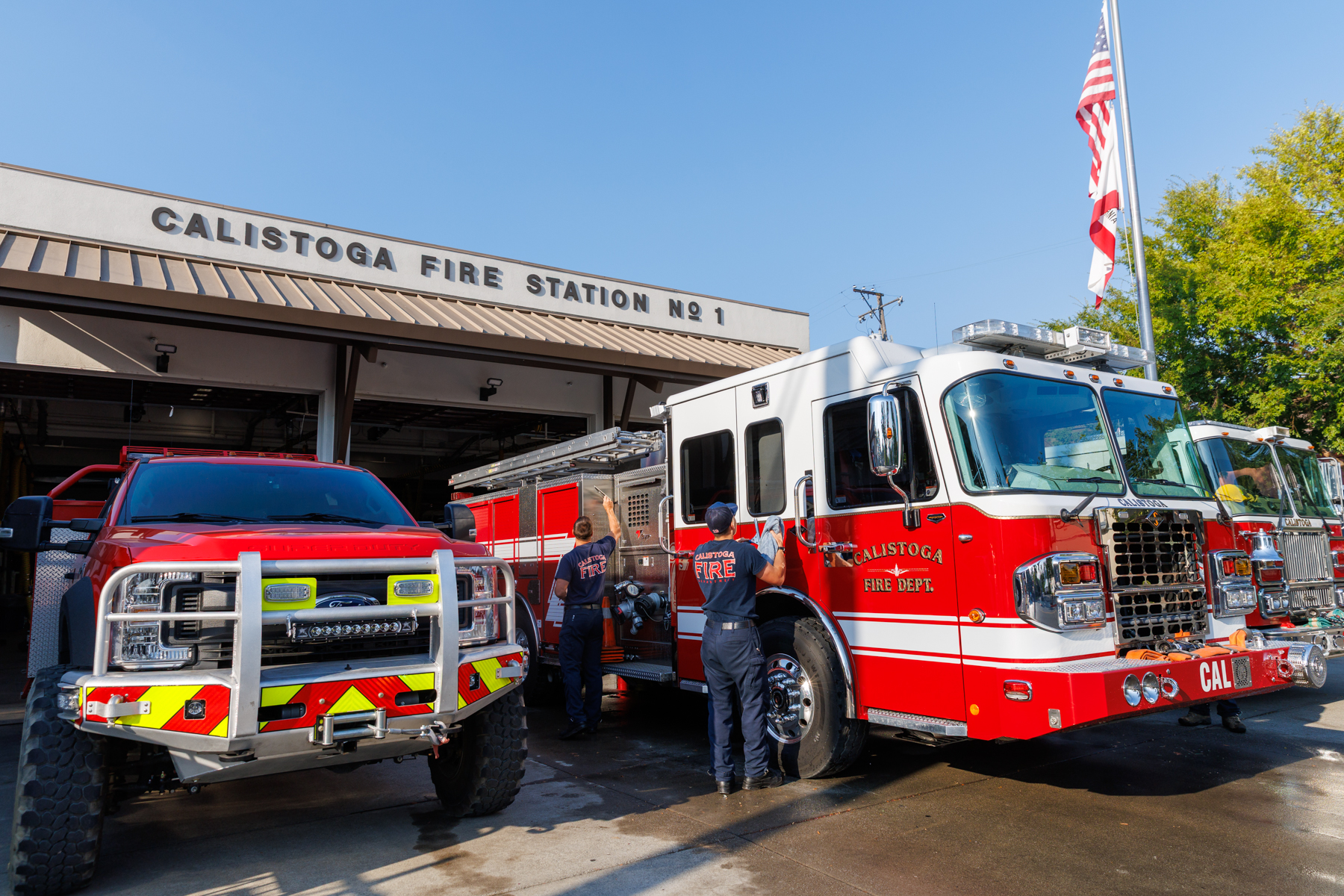
When troubles come to Napa County, our first responders show up without hesitation, giving everything they can to protect and support our community.
Sometimes those troubles affect a single person or family, as is the case with a medical emergency or roadway accident; sometimes those troubles affect us all, which is true for natural disasters.
Unsurprisingly, the weight of traumatic calls and repeated crises takes a significant toll on those who step forward first. In 2023, brothers Doug and Brad Shafer approached Napa Valley Community Foundation (NVCF) with a unique vision: they wanted to support Napa County’s first responders through a Field of Interest Fund that would make grants to support both mental and physical health care, and other unmet needs.
Thanks to the Shafers, NVCF’s First Responders Fund is now doing just that.
The Fund was inspired by the Shafer family’s legacy of local philanthropy and a clear, unmet need the brothers saw after years of devastating wildfires.
“Our father, John Shafer, was active philanthropically, and his philosophy of giving back to the community rubbed off on us,” said Brad Shafer. “In his day, that meant helping expand access to healthcare for farmworkers through Clinic Ole. We wanted to do something similar in an area of urgent need today.”
“One question was, what needs aren’t being met?” Doug Shafer said. “There’s a lot of wonderful organizations doing great work, but when we spoke with Sheriff Oscar Ortiz (whose father was the vineyard manager at Shafer Vineyards when Doug and Brad were younger), the first thing he said was ‘there’s a need for mental health support.’”
Filling a critical gap
The brothers modeled the First Responders Fund after programs like the CHP 11-99 Foundation, which provides emergency benefits and assistance to CHP employees and their families, but with a focus on Napa County’s agencies.
They wanted to launch a local program and found a natural partner in NVCF, where we could provide the infrastructure, confidentiality, and administrative support needed to make the Fund work.
“Confidentiality was a huge concern,” Doug explained. “This is a small county. Terence and the Foundation were incredible about making sure applications would be confidential so people would feel comfortable asking for help.”
What began as a pilot has since grown into a countywide resource serving first responders across Napa Valley, including American Canyon Fire Protection District, Calistoga Police Department, Calistoga Fire Department, Napa City Police Department, Napa City Fire Department, Napa County District Attorney’s Office, Napa County Sheriff’s Department, St. Helena Police Department, and St. Helena Fire Department.
The greatest need has been mental health support. But the Fund is also flexible, providing financial assistance for uninsured medical expenses and other disaster-related emergency needs. (A grant from the Fund even helped the volunteer-led Napa County Search and Rescue team purchase a new Polaris Ranger quad vehicle to support their wildland rescue efforts.) Importantly, the financial assistance program extends not only to first responders, but also to their spouses and children.
“Many of the things first responders are dealing with come home with them and can impact the families too,” Brad said.
What it means on the ground
For first responders themselves, the impact is tangible.
“This is such an important initiative,” said Zach Curren, Fire Chief for the City of Napa. “Our first responders are out daily attending to sometimes severe emergencies, and at times this can come at a great cost—including mental and emotional well-being. Ensuring that first responders have access to resources to keep them safe and healthy is an important investment.”
Sergeant Nathalie Verdeille of the Napa County Sheriff’s Office echoed that sentiment, noting how meaningful expanded access has been.
“When I first heard about this, I was ecstatic,” she said. “Having the Fund cover longer-term therapy sessions was huge—it helps make sure our minds are healthy, which is so important for longevity in this career.”
She also added that while law enforcement culture around mental health has improved, barriers still exist.
“Some people still worry that seeking help makes them look weak or could affect their job,” Verdeille said. “The Fund is making mental health resources more accessible so more people can attend counseling either individually or with their spouse/partner. And we are talking about it more, sharing our experiences, or even recommending good therapists to go to.”
Why local support matters
For those who serve, the Fund’s local nature is key.
“These wonderful people care deeply for our first responders, and their generosity speaks volumes about how much our community cares,” Chief Curren said. “It reinforces to our first responders—especially those in crisis—that their service is valued and appreciated by those within our Napa Valley community.”
Brad and Doug agree. Partnering with NVCF to build the initiative locally made it possible to turn an idea into a lasting impact.
“The Foundation makes it easy for people who want to be charitable in a specific way,” Brad said. “From the website to the forms to the back-end processes, it’s been seamless. From the start, Terence said, ‘This sounds great—let’s figure out how to make it work.’ And that made all the difference.”
Today, the First Responders Fund stands as a reminder that caring for those who protect our community means caring for their whole health—and that of the families who support them.