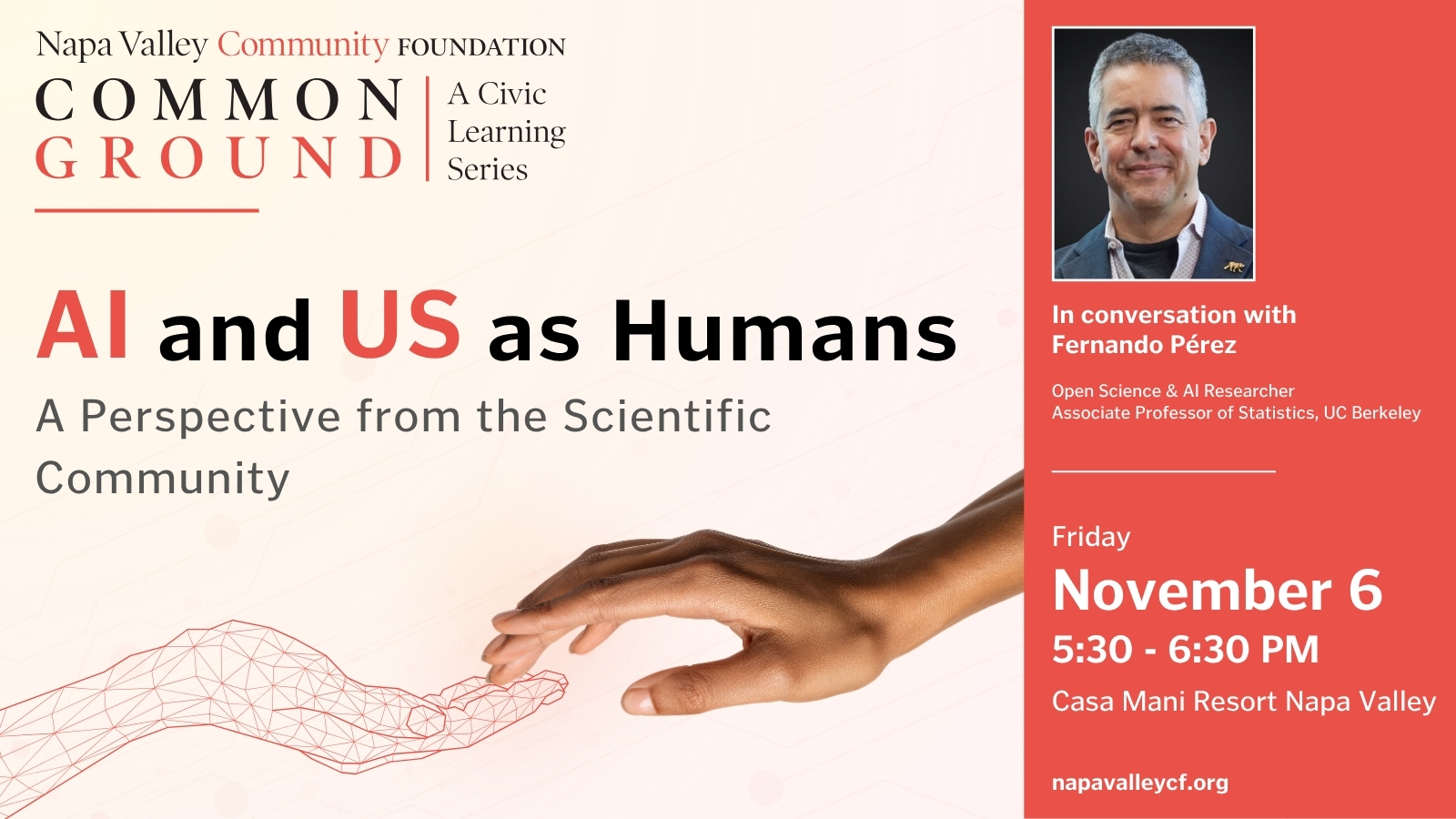
AI and Us as Humans: A Perspective from the Scientific Community
Six months ago, discourse on the impact of AI was chiefly focused on the potential for massive productivity gains, on the one hand, and job losses at an unprecedented scale, on the other. While those threads of the AI conversation remain central, new concerns have entered the frame, spurred by beseeching messages from current and former employees at OpenAI and Anthropic; a series of incidents in which AI agents broke out of their test environments; and growing opposition to data centers, among other things. These new concerns include the environmental impact of the AI build-out, the absence of any regulatory framework to contain a rapidly evolving technology, and the potential for AI to wreak havoc (in the hands of malign actors) in the short term, or even unseat homo sapiens from our perch at the top of the food chain in the longer term.
If you’ve listened to Bill Gates on this topic, you might be deeply worried already. If you’ve listened to Jensen Huang, you might feel more optimistic than worried.
Please join us for a conversation with UC Berkeley Professor Fernando Pérez touching on these and other key questions:
- How do we make sense of what is happening, and what yet may happen with respect to AI?
- What are the benefits and drawbacks of the proprietary approach to AI being pursued in the US compared with the open-source approach being pursued in China?
- What lessons can we learn from how the scientific community approached other technological developments over the last few decades, building open technologies that benefitted all of society?
When: November 6, 2026 | 5:30-6:30 pm (Doors open at 5:00 pm)
Where: Casa Mani Resort Napa Valley, 1075 California Blvd, Napa, CA 94559
RSVP: Below
Parking: Complimentary valet parking is available. Space is limited, so we’d love for you to carpool if you can. When you arrive, please let the attendants know you’re joining us for a Napa Valley Community Foundation event.
This event is free and open to the public and hosted by Napa Valley Community Foundation, a nonprofit, nonpartisan organization.
About the Speaker
Fernando Pérez is an Associate Professor in Statistics at UC Berkeley, Faculty Scientist at Lawrence Berkeley National Laboratory, faculty director of the Berkeley Institute for Data Science (BIDS), and co-director of the Eric and Wendy Schmidt Center for Data Science & Environment (DSE).
His research focuses on the intersection of interactive computing, open science, and AI-based tools for science, with a particular focus on questions related to the earth’s cryosphere, climate change and environmental sustainability.
He also co-leads the JupyterHealth initiative that brings open source and AI into healthcare, in partnership with clinical and biomedical researchers. He created IPython while a graduate student in 2001 and co-founded its successor, Project Jupyter. At Berkeley, he also leads computing platforms at the Bakar Institute for Digital Materials for the Planet. Also an entrepreneur, he is a co-founder and CTO of Archean (formerly AIMATX), which uses AI tools to accelerate the discovery of novel materials for the economy of the future.
Fernando holds a PhD in particle physics from the University of Colorado at Boulder, which he followed with postdoctoral research in applied mathematics.
Hourly Schedule
- 5:00 - 5:30
- Doors Open
- 5:30 - 6:00
- Keynote Talk
-
Speakers:
Fernando Pérez
- 6:00 - 6:30
- Q&A
-
Speakers:
Fernando Pérez

Speaker
-
Fernando PérezOpen Science & AI Researcher, Associate Professor of Statistics, UC Berkeley
Fernando Pérez is an Associate Professor in Statistics at UC Berkeley, Faculty Scientist at Lawrence Berkeley National Laboratory, faculty director of the Berkeley Institute for Data Science (BIDS), and co-director of the Eric and Wendy Schmidt Center for Data Science & Environment (DSE).
His research focuses on the intersection of interactive computing, open science, and AI-based tools for science, with a particular focus on questions related to the earth’s cryosphere, climate change and environmental sustainability.
He also co-leads the JupyterHealth initiative that bring open source and AI into healthcare, in partnership with clinical and biomedical researchers. He created IPython while a graduate student in 2001 and co-founded its successor, Project Jupyter. At Berkeley, he also leads computing platforms at the Bakar Institute for Digital Materials for the Planet. Also an entrepreneur, he is a co-founder and CTO of Archean (formerly AIMATX), which uses AI tools to accelerate the discovery of novel materials for the economy of the future.
Fernando holds a PhD in particle physics from the University of Colorado at Boulder, which he followed with postdoctoral research in applied mathematics.